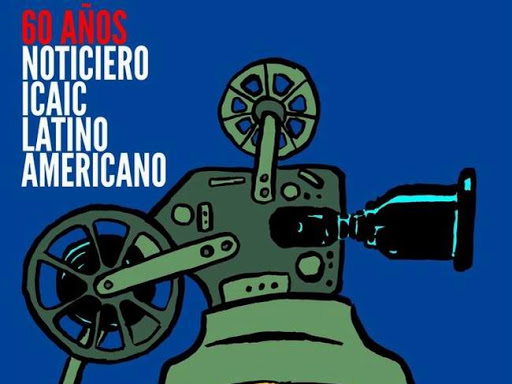
In June 2020 Cuba celebrated the 60th anniversary of its newsreels with film screenings on TV and film poster exhibitions.
In 1959 Cuba established the National film institute ICAIC, to create and promote a national film industry, and on 6 June 1960 ICAIC released its first ‘Latin American Newsreel’ shown in cinemas around the country.
They were produced weekly from 1960 to 1990, and form a unique historical document depicting events such as the world’s growing polarisation, the independence wars of African colonies, popular uprisings around the world, as well as domestic developments and challenges during those first three decades of the Cuba revolution.
Each newsreel usually lasted 10 minutes, although some were longer, Many of Cuba’s now celebrated filmmakers worked on the ‘noticiero’ such as Daniel Díaz Torres, Fernando Pérez, Rolando Díaz, Rebeca Chávez, José Padrón and Miguel Torres, headed by Santiago Alvarez.
“We use a documentary style. Each film has a single theme, they revolve around that node. They can be varied, but all the news gravitates around the same subject and are linked to the centre”, said Santiago Alvarez in an interview that he gave in 1980 to the critic Alejandro Alonso.
Decades later, Álvarez, explained: “We have tried to do it with the best possible quality through continuous trials and experimentation. We have not got to the Moon for lack of opportunity; but the images that exist in our archives are of great universal historical value.”
In 2009 the original negatives of the ICAIC Latin American Newsreels were registered by UNESCO as ‘World Memory’, to acknowledge their great historical significance not only for Cuba.

 SCREEN CUBA, 15-28 March 2026, LONDON & BEYOND