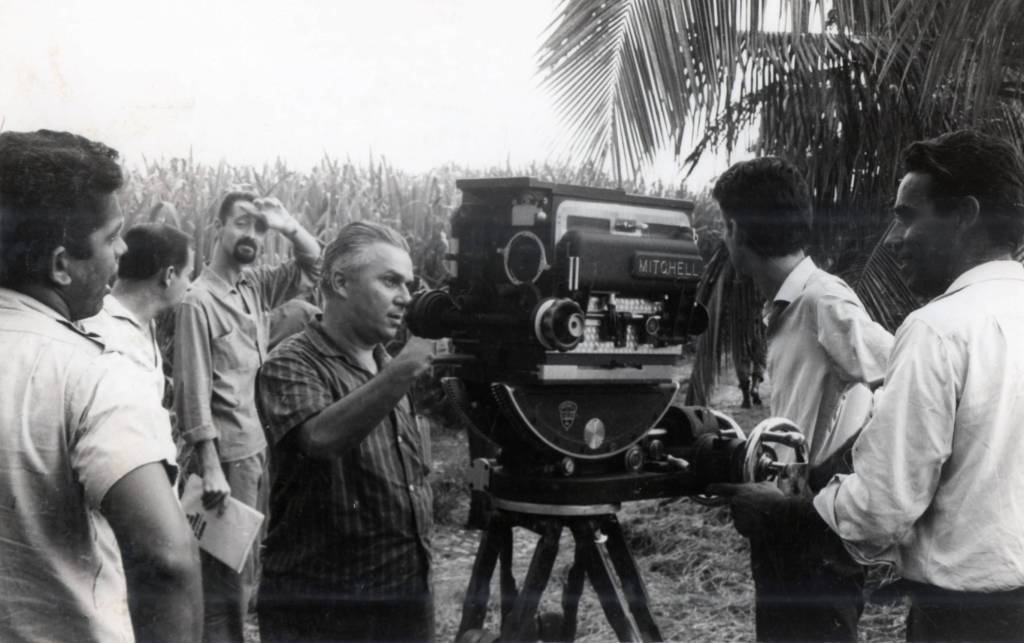
A tribute to the revolutionary Cuban filmmaker Santiago Álvarez and his “urgent cinema” approach he developed, making hundreds of innovative newsreels and documentaries raising public consciousness from the early 1960s. Followed by three important early shorts by Alvarez.
Introduced by Michael Chanan, filmmaker and writer, author of ‘Cuban Cinema’ (2003) and special guest from Cuba, Silvia Padrón Durán, director of La Manigua film and culture project for children and young people in Havana.
Sat 29 March 2025, 2.30pm Screen 1 at the ICA London.
Accelerated Under-Development: A Film in the Idiom of Santiago Álvarez | Travis Wilkerson | 1999, US | 65m | 18
“Give me two photographs, a moviola and some music and I’ll make you a film”, Alvarez famously said. The revolutionary Cuban filmmaker Santiago Álvarez Román (1919–1998) made “urgent cinema” for social goals, raising public consciousness about issues such as independence struggles around the world, as well as documenting events in Cuba emphasising collective efforts for the benefit of all, using music and collage techniques to express his message. He made hundreds of weekly newsreels and other documentaries for the state Cuban film institute ICAIC to be shown in cinemas after 1959. Alvarez had grown up in a poor neighbourhood of Havana and worked for a while in the US, which helped form his anti-racist politics. UNESCO recently declared a collection of the newsreels as World Heritage and they have been restored by ICAIC. US radical filmmaker Wilkerson was deeply inspired by his work, and understood that “instead of asking whether images can change the world, this new cinema seeks to discover what should be changed and how”.
Followed by selected shorts:
Hurricane / Ciclón | Santiago Álvarez | 1963, Cuba, ICAIC | 22m | 18
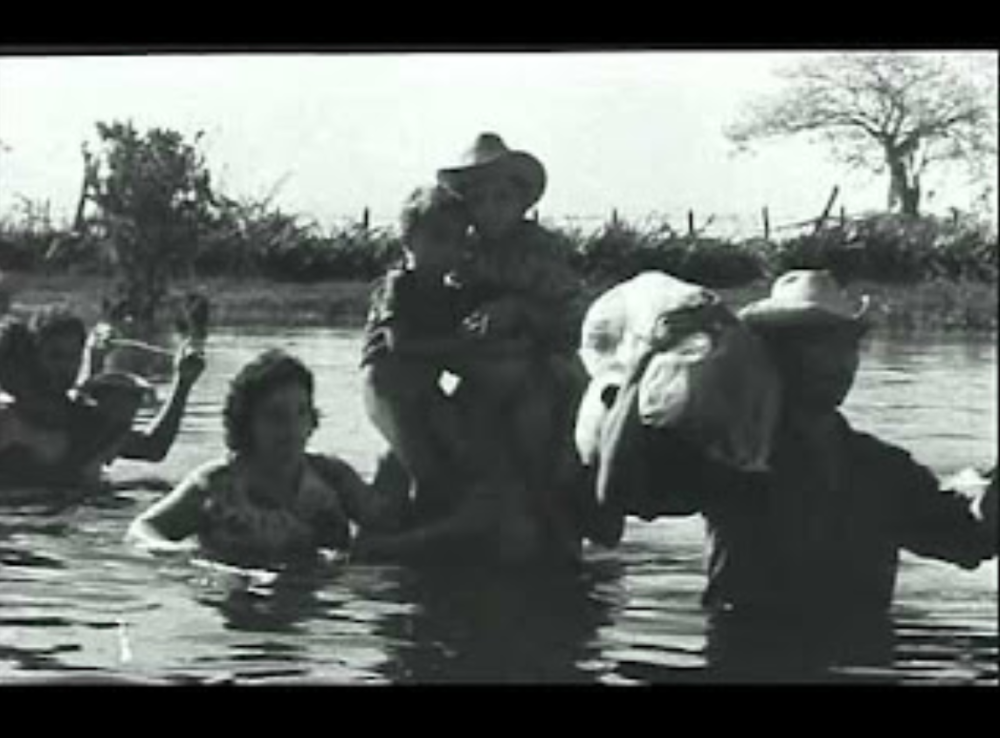
When Hurricane Flora hit eastern Cuba in 1963 Alvarez captured the devastation, the evacuation of rural communities, and the cleanup. Alvarez transformed ‘the pedestrian newsreel into a dynamic factory of radical innovation’, and Hurricane is where he first found his voice. With skilful editing and other post-production techniques, Alvarez presents a structured and unified narrative – all without planned material, using footage from other cameras located along the path of the hurricane. The deep emotional impact of the film comes from the dramatic interplay of graphics, mute images, text, silence and above all, music, all of which transform the newsreel into a poetic and informative work.
Funeral of Benny Moré /Al Final, Sepelio de Benny Moré| Santiago Álvarez | 1963, Cuba, ICAIC | 4m | 18
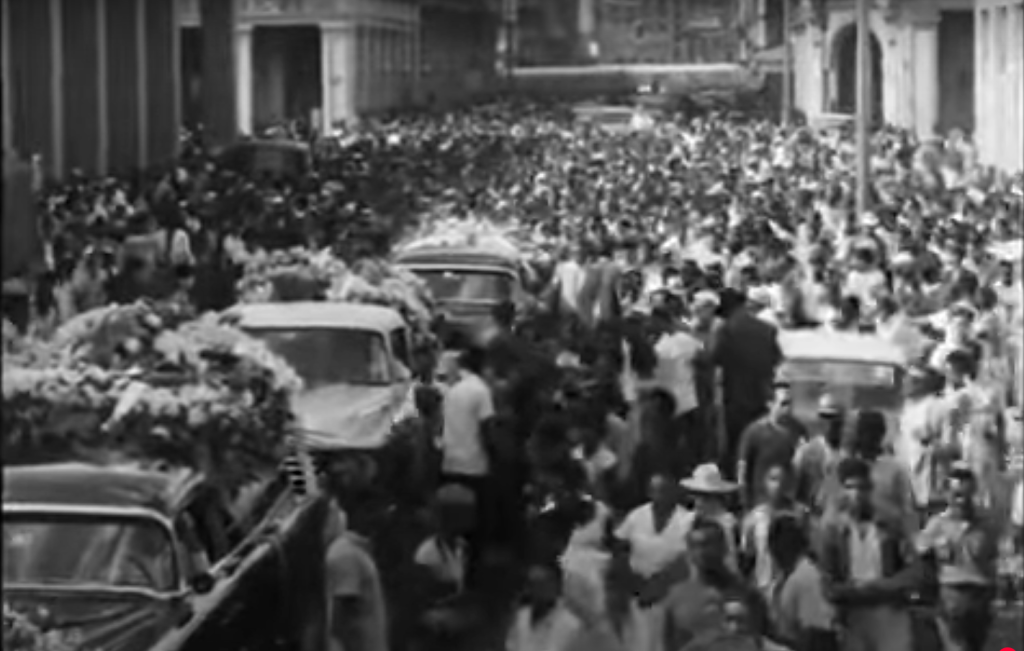
ICAIC newsreel 142 features the funeral of celebrated Cuban singer, Benny Moré (1919-1963). At a time when many musicians left for Miami, Benny had stayed saying he wanted to be “with my people”. Born into a desperately poor rural family of 18, Benny achieved his place as the king of Cuban music, respected for his immense musical knowledge, fantastic songs, and inspirational voice. Alvarez captures the people’s love for him and his music, as sequences of his performances are interlaced with emotional scenes of over 100,000 people following his funeral cortege. Alvarez took a risk by using ‘happy’ music, and it brought about his “personal discovery of the importance of sound. I have never forgotten the lesson.”
Cerro Pelado | Santiago Álvarez | 1966, Cuba, ICAIC | 34m | 18
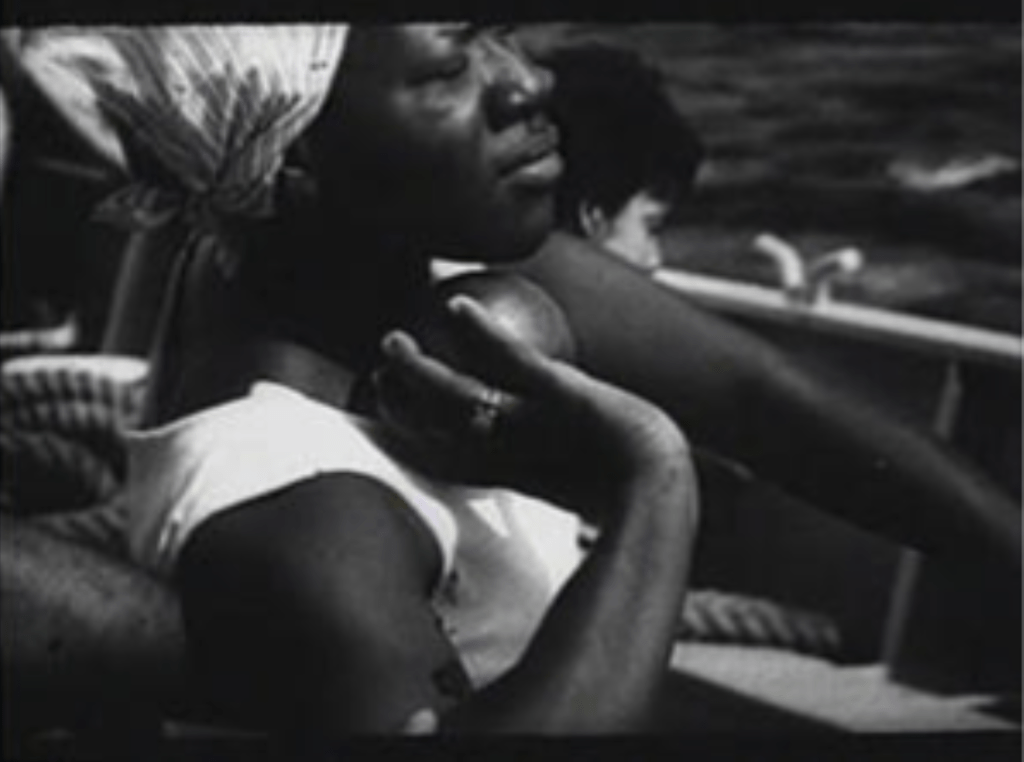
A fascinating account of how a merchant ship the ‘Cerro Pelado’ transported Cuban athletes to the Central American and Caribbean Games when the US government tried to stop them from participating in Puerto Rico, a US colony. When the ship arrived at the port, the Cubans forced the port officials to uphold the Olympic regulations and allow entry, and went on to win many medals. The film is a visual triumph. Rhythmic images of dancers on the deck are juxtaposed to athletes exercising in choppy seas; shots from the rifles of athletes who are training shift to images of the aircrafts circling above. Alvarez successfully uses music, rather than commentary, to tell the story. Altogether an uplifting, well-crafted film.
AWARDS Paloma de Oro, IV International Festival of Documentary and Short Film, Leipzig, GDR (1966); Special Mention, Cubana Program, V Latin American Film Festival, Viña del Mar, Chile (1967); Universidades Nacionales Award, (Santiago Álvarez), I Latin American Documentary Film Showcase, Mérida, Venezuela (1968)


 SCREEN CUBA, 15-28 March 2026, LONDON & BEYOND