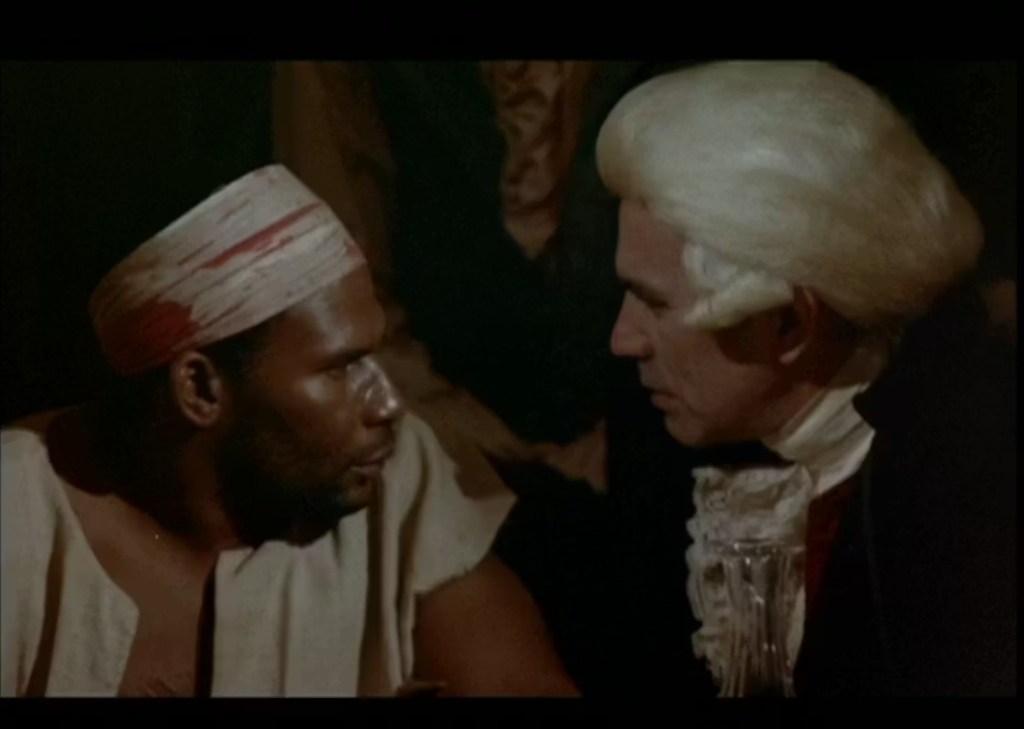
Screen Cuba is set to bring Tomás Gutiérrez Alea’s awardwinning film The Last Supper / La última cena from 1976, to the 2026 festival this March.
This powerful yet painterly drama brings a pious sugar plantation owner in 1790s Cuba to share his table at Easter with 12 enslaved men. A radical parable showing slavery as a social and economic system and highlighting Black resistance. Alea, the godfather of Cuban cinema, has created “a masterpiece from the first image to the last”.
This is a subtle, ironic anti-clerical fable set on a sugar plantation in Cuba just after the Haitian revolution of 1795, when the Spanish colonial powers feared the same thing would happen in Cuba. The film was inspired by a real story of Count de Casa-Bayona who, to ease his conscience, washed the feet of 12 of his enslaved men on Holy Thursday and invited them to dine with him.
The impressive dinner sequence is the structural core of the film: almost an hour. The director, Tomas Alea stated, “the specific personality of some slaves who momentarily play the part of the apostles is revealed, with the intention of questioning the highly controversial image of the slave constructed by the culture of the oppressor, revealing all its contradictory aspects…”. It is an extraordinary meditation on speech and power, slavery and freedom, submission and rebellion, ideology and oppression, ritual and ethics.
After the dinner, reality gets the upper hand of this group of ‘chosen’ men, tricked by the words of the Count who, under the influence of alcohol, compares himself to Christ. The microcosm of these 12 men expands to the whole community, which rebels and is harshly suppressed. The film stands out for its profound treatment of the story of slavery.
2026 marks the 50th anniversary of this film.
“An allegory of the religious hypocrisy of a plantation owner, brilliantly played by the exiled Chilean actor Nelson Villagra, towards his enslaved men, the film is a tour de force of black comedy.” Michael Chanan, author ‘Cuban Cinema’
“Undoubtedly, his dinner sequence, between the count and the slaves -with fifty minutes of duration-, will remain as one of the most brilliant stylistic exercises in the history of cinema.”
Diego Galán, Diario El País



 SCREEN CUBA, 15-28 March 2026, LONDON & BEYOND