PROGRAMME FOR 2026 FESTIVAL AND TICKETS ON SALE
QUICK VIEW – SCREEN CUBA linktree
TICKETS ON SALE NOW FOR ALL ICA SCREENINGS
TICKETS ON SALE NOW FOR ALL GARDEN CINEMA SCREENINGS
London Venues: Garden Cinema, 39-41 Parker Street WC2B 5PQ / ICA (Institute for Contemporary Arts), The Mall, SW1Y 5AH / Barbican Cinema, Beech Street, EC1Y 8AA / Birkbeck University Cinema, 43 Gordon Sq, WC1H 0PY
PLUS Venues in Oxford, Nottingham, Derby, Manchester, Leeds, Pontypridd.
All films are in Spanish with English Subtitles
Screenings at ICA: BOOK HERE
Lucia Sun 22 March, 2.00pm
The Last Supper Tues 24 March, 6.30pm
Screenings at Garden Cinema: BOOK HERE
The Twelve Chairs Sun 15 March, 2.00pm
Up to a Point Wed 18 March, 6.00pm/6.30pm
Capablanca Sat 21 March, 2.00pm
House for Swap Sat 21 March, 4.30pm
El Benny Wed 25 March, 8.00pm
Life is Dance Fri 27 March, 6.30pm
Screening at The Barbican Cinema: BOOK HERE
20 Years Thu 19 March, 6.30pm (short, shown with Chico y Rita, animated feature)
BIMI-Screen Cuba collaborations at Birkbeck University Cinema:
The Revolution Will Be Archived Fri 20 March 3-5pm: Workshop and screening: I will go to Santiago (Sara Gomez, 1964), Chronicles of my Family (Sara Gomez, 1966)), Now! (Santiago Alvarez 1965), An Elpidio Valdes Adventure (Juan Padron, 1974). With special guests from Cuba. Priority to students. More info/book a place FREE ENTRY
Screening: Cuentos de un día más/ Tales of One More Day Fri 20 March 6-8.30pm Followed by Q&A with special guests from Cuba, Tania Delgado Fernandez director Havana International Festival of New Latin American Cinema and Mirta Ibarra, actor. More info/book a place FREE ENTRY
SCREENINGS BEYOND LONDON – TICKETS ON SALE
OXFORD, Ultimate Picture Palace Sat 21 March – The Last Supper Tickets on sale now
NOTTINGHAM, Broadway Cinema Sun 29 March – A Night with the Rolling Stones Tickets on sale now
DERBY, QUAD Cinema Thu 2 April – A Night with the Rolling Stones Tickets on sale now
PONTYPRIDD, Yma Cinema Thu 2 April – A Night with the Rolling Stones Tickets on sale now
MANCHESTER, Home Cinema Sun 12 April – Twelve Chairs tickets on sale now
LEEDS, Hyde Park Picturehouse Sun 19 April – The Last Supper + Twelve Chairs tickets on sale now
LEEDS, Hyde Park PictureHouse Sun 10 May – Death of a Bureaucrat tickets on sale now
DETAILED PROGRAMME IN CHRONOLOGICAL ORDER

SUNDAY 15 MARCH Screen Cuba presents: The Twelve Chairs / Las doce sillas
BOOK TICKETS 2.00pm, Sunday 15 March 2026 at The Garden Cinema, Screen 3
Twelve Chairs / Las doce sillas | Tomás Gutiérrez Alea | 1962 | Cuba | 1h 37m | 18 | Black and white
This first feature film by Alea is this cunning adaptation of a comic novel from the early years of the USSR by Ilf and Petrov. The madcap plot concerns the hunt for family jewels hidden by a wealthy Cuban matriarch before she died, in one of a set of 12 dining chairs which have been sold off individually. Son-in-law Hipólito and his former chauffeur Oscar both embark on a desperate adventure to find the ‘treasure’ before each other or the state does. They struggle to understand the new Cuban society, its rejection of class status, individual wealth and not to mention the maze of new official state organisations – a mix of real and imagined.
When the movie was made the revolution in Cuba was only 2 years old, filming had to be paused in April 1961 when the US attacked at Playa Girón, and the impact of the new US blockade was overwhelming. For a newly liberated country in those circumstances to be able to laugh at itself in this joyful way is astonishingly confident. Conventions of silent movies, slapstick, animation and social realism are all evident in this unmissable first comedy of the revolution.
Introduced by Screen Cuba team
AWARDS 1962 Annual Critics’ Selection, Havana; 1963 Diploma of honour from the Union of Film Workers, III International Film Festival, Moscow.
CAST Enrique Santiesteban, Reynaldo Miravalles, René Sánchez, Pilín Vallejo, Idalberto Delgado, Jorge Martínez, Fausto Pinelo
REVIEW
WEDNESDAY 18 MARCH
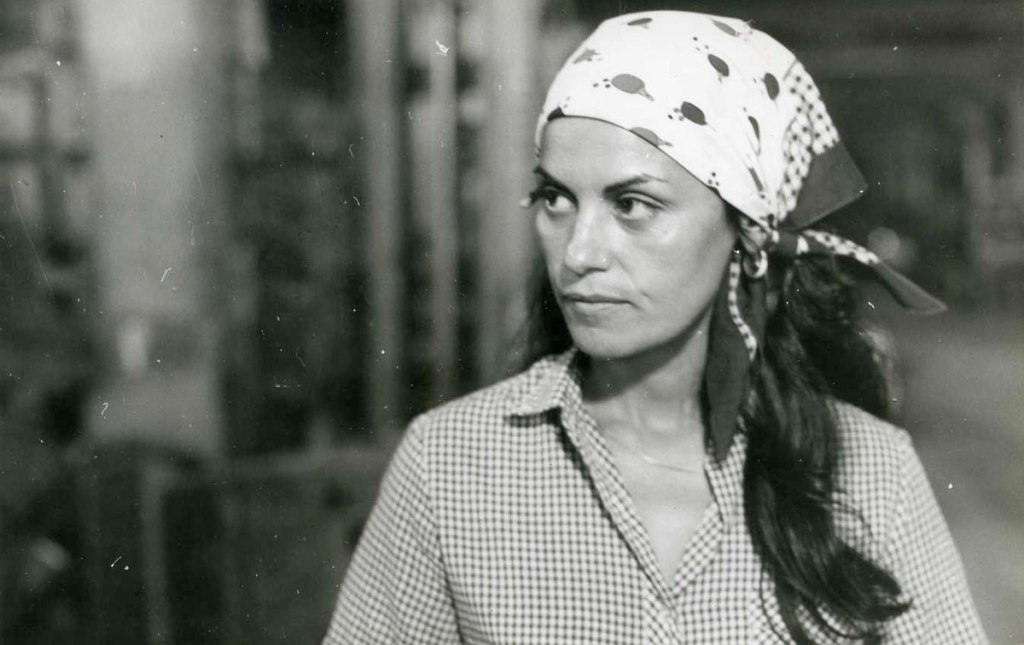
Screen Cuba presents: Up to a Point / Hasta cierto punto
Please bear in mind that the age and rarity of this film means that the quality may not be what you are used to, however this is the last remaining version and a rare opportunity to see a hugely important and influential Cuban film of the 1980s.
Introduced by special guests from Cuba, Tania Delgado Fernandez, director of the Havana Film Festival and Mirta Ibarra, celebrated actor.
Up To a Point / Hasta cierto punto | Tomás Gutiérrez Alea | 1983 | Cuba | 1h 8m | 18 | colour
A clever drama about resisting machismo in all areas of Cuban society. The female lead is a dockworker, played by one of Cuba’s distinguished actors, Mirta Ibarra. A celebrated film with meaning for all of society.
This clever and entertaining satire tells the story of Oscar, a married scriptwriter who is researching the social problem of male chauvinism in the workplace for a film. Focussing on dockworkers, he encounters the sexism and contradictions of the film director, Arturo, and…himself, when he starts an affair with female dockworker Lina.
This film, set in the present day, clearly aimed to challenge the Cuban public about their own behaviour in the workplace and outside it, encouraging women to call out sexism and stereotypes, like Lina does. The constitution of 1976 had enshrined sexual equality but in the early 1980s there was a shift in gear in Cuban cinema to redefine itself as more urgent and critical of ongoing problems in society.The mix of fiction and current reality reinforces the revolution as an ongoing process. As the film opens a real life dockworker being interviewed says “I’ve changed by 80 per cent…. Equality between men and women is right and proper, but up to a point…”
AWARDS 1983 Best Film, Best Actress (Mirta Ibarra), Havana International Festival of New Latin American Cinema; 1984 Notable film of the year, London International Film Festival; 1984 Caracol First Prize, National UNEAC Festival of Cinema, Radio and Television; 1985 Bronze prize, Damascus Film Festival; 1988 Special Jury Prize, 6th Biarritz Film Festival.
CAST Oscar Álvarez, Mirtha Ibarra, Omar Valdés, Coralia Veloz, Rogelio Blaín, Ana Viña
REVIEW
TRAILER
THURSDAY 19 MARCH and 30 MARCH
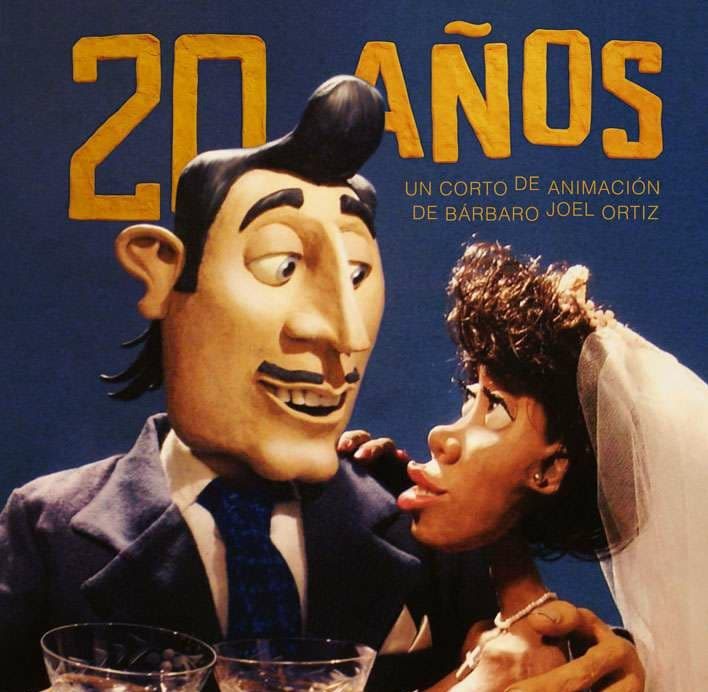
Screen Cuba presents: 20 Years/ Veinte Años
Part of The Barbican’s ‘Animation in Love’ season. This is a short being shown with the 2009 Spanish feature animation ‘Chico and Rita‘ presented by The Barbican, curated by Michael Leader. The short will be introduced by special guests from Cuba, Tania Delgado Fernandez, director of the Havana Festival of New Latin American Cinema, and Mirta Ibarra, celebrated Cuban actor.
BOOK TICKETS 6.10pm, Thursday 19 March 2026 at The Barbican Cinema, Screen 2
20 Years / Veinte Años | Bárbaro Joel Ortíz | 2009 Cuba, ICAIC | 15m
This award-winning short animation has a well-known Cuban song 20 Años sung by Omara Portuondo (of Buena Vista Social Club fame) as its soundtrack, with Harold Lopez-Nussa on piano. It tells the story of a woman who lives in a hostile environment of humiliation by her husband until finally her love is put to the test. Technically, it marked a new stage in the techniques of animation production on the island to create a realism rarely achieved in stop-motion.
AWARDS 2009 Special Jury Prize, International Festival of New Latin American Cinema, Havana; Vigía Award, Union of Writers and Artists, Havana; 2010 Best Animation, AVANCA Festival, Portugal; 2010 Best Animation, Festival Internacional del Cine Pobre Humberto Solás, Gibara, Cuba; 2010 Special mention, Annecy International Animation Film Festival, France; 2010 Best Animation, Animae Caribe Festival, Port of Spain, Trinidad and Tobago; 2010 Audience Award, Säo Paulo Film International Short Film Festival (Kino Forum), Brazil; 2011 Best Short Film, Festival Cine del Mar: Cine del Mercosur, Uruguay; 2011 Best Foreign Animated Short Film, International Family Film Festival, Hollywood, USA; 2011 Pulcinella Award, Best Short Film, Cartoon on the Bay Festival, Italy.

SATURDAY 21 MARCH
Screen Cuba presents: Capablanca
Introduced by special guest from Cuba, Tania Delgado Fernandez director of Havana’s Festival of New Latin American Cinema .
BOOK TICKETS 2.00pm, Saturday 21 March 2026 at The Garden Cinema, Screen 3.
Capablanca | Manuel Herrera | 1986, Cuba | 1h 37m | 18
Cuban world chess champion José Raúl Capablanca is the inspiration for this stylish drama set in 1925, part sports pride, part tragic love story. The man who created a revolution in the game of science, goes to Moscow to test his strength and falls in love with a Bolshoi ballerina.
The brilliant chess player José Raúl Capablanca (1888-1942), is an icon to many Cubans: inspiring generations to learn the game, while Fidel Castro himself promoted it as a tool in educational development. The Cuban world chess champion 1921-1927 is the subject of this film, charismatically played by César Évora. Directed by Manuel Herrera, the drama is set in 1925, a decisive moment in Capablanca’s life, when he arrives in Moscow, to participate in an international tournament but falls in love with a Bolshoi ballerina. Despite embellishing the truth, the Cuban-Soviet production was a big hit in both countries: part sports pride, part tragic love story. Although the film is made in full colour, the stylish use of black and white elements reflects the chess board. The film was lost to Cuba since the 1990s until 2024, when a complete print was discovered in the Moscow film archives making possible a beautiful restoration by Russian and Cuban specialists.
CAST César Évora, Galina Beliáeva, Eslinda Núñez, Beatriz Valdés, Adolfo Llauradó, Ramón Veloz. Plus music by Sergio Vitier.
TRAILER
SATURDAY 21 MARCH
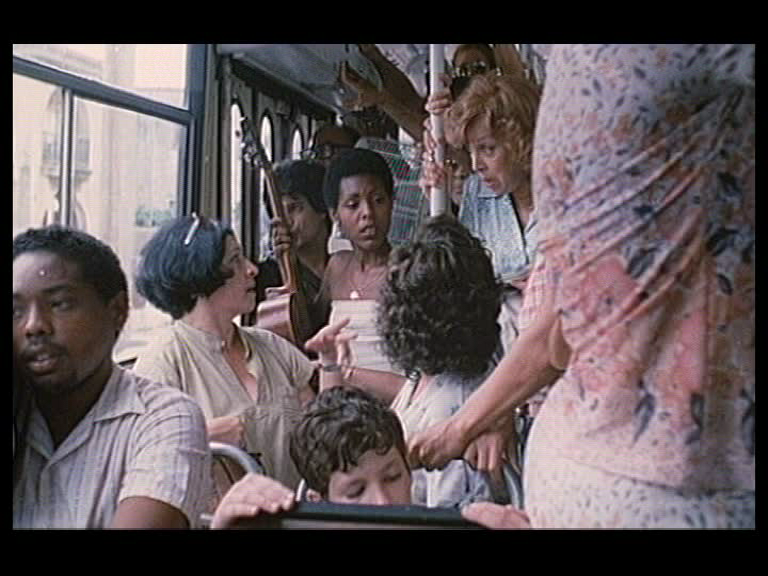
Screen Cuba presents: House for Swap / Se Permuta
Introduced by special guests from Cuba, Tania Delgado Fernandez, director of the Havana Film festival. Followed by Q&A. With celebrated Cuban actor Mirta Ibarra (who also appears in the film).
BOOK TICKETS 4.20pm, Saturday 21 March 2026 at The Garden Cinema, Screen 3.
House for Swap / Se permuta | Juan Carlos Tabio | 1983, Cuba | 103m | colour, Spanish with English subtitles | restored
This film heralded a new genre of sociocritical comedy in Cuba and was the debut feature of director Juan Carlos Tabio. It is full of Cubanisms – popular everyday problems, language and attitudes of that era and a range of characters from an idealist architect to an opportunistic bureaucrat. Gloria wants her adult daughter to find a husband, who she considers a “good match”, and engineers a chain of house swaps to move to a “better neighbourhood” to make things go her way – but her daughter has different ideas and to love who she wants. It examines the desire to get ahead in a society that says everyone is equal but also celebrates the resourcefulness with which people solve their own problems.
Tabio wanted to make his Cuban audience laugh but also to recognise themselves and reflect on possible solutions. The film attracted huge audiences of 2.2 million. At that time Cubans could not buy or sell houses but could swap them to move. The film caused such a public debate that parliament changed the law so people could own their homes and rent out rooms, in an attempt to ease housing problems in the city.
AWARDS 1984 Best female performance (Isabel Santos) at I International Festival of Film, Television and Video of Rio de Janeiro, Brazil; Third Prize VI International Festival of New Latin American Cinema, Havana, Cuba.
CAST Rosita Fornés, Isabel Santos, Mario Balmaseda, Ramoncito Veloz, Silvia Planas, Manuel Porto, Mirtha Ibarra, Maritza Rodríguez, Litico Rodríguez, Rini Cruz, Raúl Eguren, José Antonio Coro.
REVIEW
Restoration by ICAIC and Labodigital, and was supervised by Charles Barthes.
SUNDAY 22 MARCH
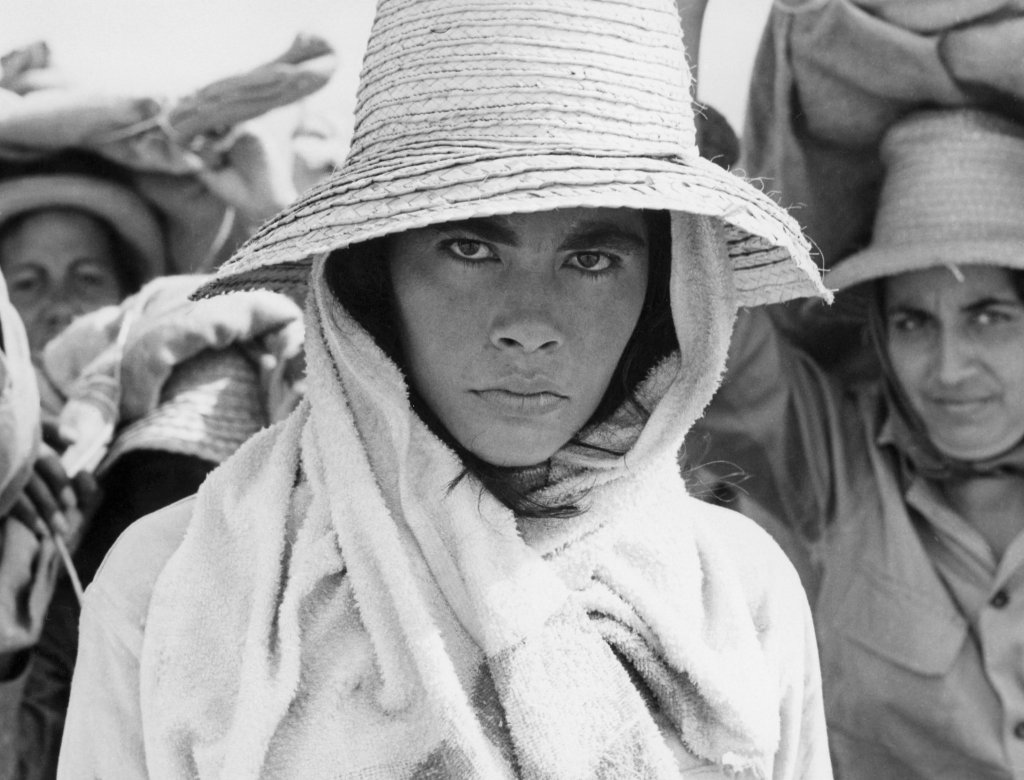
Screen Cuba presents: Lucía
BOOK TICKETS 2.00pm, Sunday 22 March 2026 at ICA Cinema, Screen 1.
The screening will be introduced by Cuban film specialist, Tania Delgado Fernandez, director of the Havana festival of Latin American Cinema.
Lucía | dir Humberto Solás, Cuba, 1968 | 2h 39 mins | Black and white | Spanish with English subtitles | 18
Through dramas of three women from different classes in three different crucial historical moments, Solás explores women’s personal and political struggles in Cuba and the road ahead. According to Solás: “Women’s role always lays bare the contradictions of a period and makes them explicit: Lucía is not a film about women, it’s a film about society”.
The film shifts from the last days of Havana’s aristocracy in 1895 during the Spanish-American war, to the struggle against Machado’s dictatorship in the 1930s to the plight of a peasant girl in the 1960s whose education, despite the revolution, is held back by outdated gender roles. Shifting in style with each period from baroque melodrama to soviet montage, Solás rejects narrative conventions to find new forms. He explained “because our history has been filtered through a bourgeois lens, we have been compelled to live with terrible distortions. We lacked a coherent, lucid, and dignified appreciation of our national past.”
Known for its innovative filmmaking techniques for a new Latin American cinema (and ‘third cinema’) as well as its politics: exceptional camera work, unique handheld sequences, and the use of music as a narrative form. The stunning soundtrack is by Cuban guitarist and composer Leo Brouwer who led the experimental sound for film unit in Havana.
Trigger warning Contains images of domestic abuse, rape, violence.
AWARDS 1969 First Prize, Gold Medal, FIPRESCI Prize at the VI Moscow Festival; 1970 One of 20 best films of the year, I International Film Festival, Tokyo, Japan; 1970 First Prize Golden Globe, Cineteca Italiana Film Festival, Milan, Italy; 1970 Diploma of Honour, Viennale, Vienna, Austria; 1971 First Prize Caracola Film Festival, cultural week ‘Alcances’, Cádiz, Spain;1971 Annual Critics’ Award for Best Film at the Circle of Art Critics, Santiago de Chile; 1981 10 best films of Ibero-American cinema, Ibero-American critics at VII Ibero-American Film Festival of Huelva, Spain.
REVIEW Criterion (US), by Dennis Lim 2020

TUESDAY 24 MARCH
Screen Cuba presents: The Last Supper / La última cena
BOOK TICKETS 6.30pm, Tuesday 24 March 2026 at The ICA, Screen 1.
The screening will be introduced by Prof. Michael Chanan, author of ‘Cuban Cinema’.
The Last Supper / La última cena |Dir. Tomás Gutiérrez Alea, Cuba, 1976 | 1hr 53 mins, colour, Spanish with English subtitles | 18
This powerful drama brings a pious sugar plantation owner, in 1790s Cuba, attempting to head off an uprising, to share his table at Easter with 12 enslaved men. A radical and often surreal parable showing slavery as an economic system and championing Black resistance. “A masterpiece from the first image to the last”.
The film was inspired by a real story. The impressive dinner sequence is the structural core of the film: almost an hour, which feels experimental and chaotic. “Let me see if I understand, when overseer beats me, I should be happy?” says one man at the table to the plantation owner. It is an extraordinary meditation on speech and power, slavery and freedom, submission and rebellion, ideology and oppression, ritual and ethics. 2026 marks its 50th anniversary.
“An allegory of the religious hypocrisy of a plantation owner, brilliantly played by the exiled Chilean actor Nelson Villagra, towards his enslaved men, the film is a tour de force of black comedy.” Michael Chanan, author ‘Cuban Cinema’
“Undoubtedly, his dinner sequence, between the count and the slaves -with fifty minutes of duration-, will remain as one of the most brilliant stylistic exercises in the history of cinema.”
Diego Galán, Diario El País
Trigger warning Contains images of violence.
CAST Nelson Villagra, Silvano Rey, Luis Alberto García, José Antonio Rodríguez, Samuel Claxton, Mario Balmaseda, Idelfonso Tamayo, Julio Hernandez
AWARDS 1976 Golden Colón Jury Prize at the Huelva Ibero-American Film Festival; the First Golden Hugo Award at the Chicago International Film Festival; the Grand Prize of the Figueira da Foz International Film Festival, Portugal; the Grand prize of the Peoples Jury at the São Paulo International Film Festival and the First Grand Prize at the Iberian and Latin American Film Festival of Biarritz; 1977 the London International Film Festival chose it as Outstanding Film of the Year.
REVIEW Hyperallergic
Restored in 2020 by ICAIC and Academy Film Archive in collaboration with Cinémathèque royale de Belgique at Roundabout Entertainment and Audio Mechanics laboratories
WEDNESDAY 25 MARCH
Screen Cuba presents: El Benny
BOOK TICKETS 8.00pm Wednesday 25 March 2026 at the Garden Cinema, Screen 1
El Benny | Jorge Luís Sánchez | 2006 | Cuba | 2h 12m
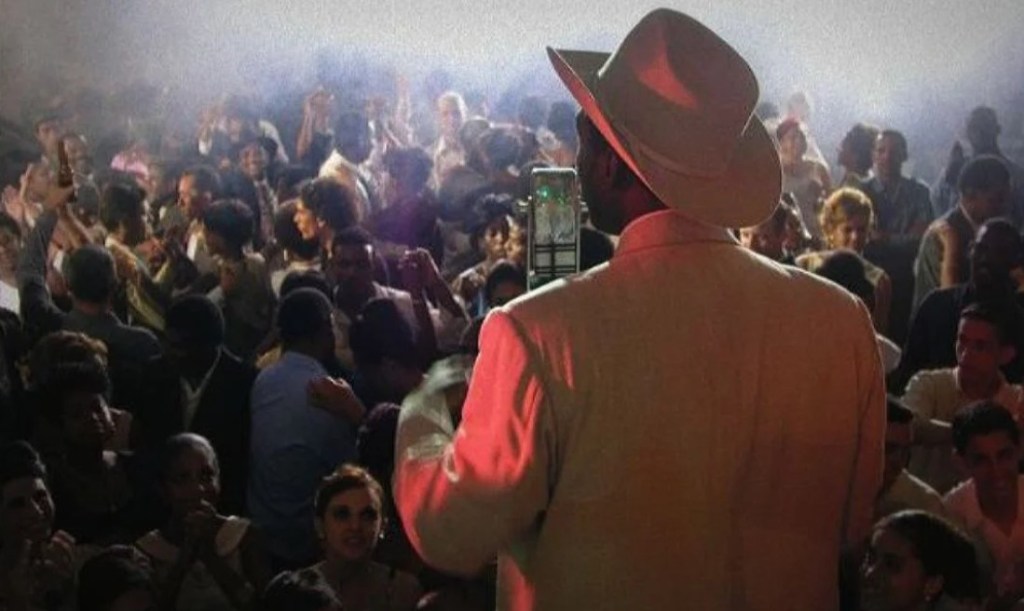
El Benny offers a warts-and-all but compassionate portrayal of the life of legendary singer and bandleader Benny Moré (1919–1963) – that not only celebrates his extraordinary musical talent but also illuminates the broader social context of music-making by Black musicians in pre-revolutionary years. It doesn’t hide from the man’s excesses nor the racism he faced, while revealing his deep commitment to his art and his people.
The drama concentrates on the 1950s, a crucial decade in El Bárbaro del Ritmo’s artistic development and his emergence as one of the greatest Latin American musicians of the 20th century. The film opens as Benny arrives in Cuba from Mexico and is offered work by a wealthy politician which doesn’t go to plan. Betrayed and frustrated, never far from a drink, the legend puts his band back together and triumphs but misfortune and chaos surround him.
The soundtrack is outstanding, with completely newly recorded tracks by Santiago singer Juan Manuel Villi, sounding uncannily like Benny. It includes help from contemporary legends pianist Chucho Valdés, and the late Los Van Van band leader Juan Formell, who composed a special tribute heard at the end of the film.
Introduced by Screen Cuba
Trigger warnings: Domestic violence
CAST Renny Arozarena (as Benny Moré), Enrique Molina, Carlos Ever Fonseca, Mario Guerra, Limara Meneses, Isabel Santos, Salvador Wood, Laura de la Uz, Kike Quiñones, Carlos Massola.
AWARDS 2006 First Prize: First Work, Havana International Festival of New Latin American Cinema; Music prize, Havana International Festival of New Latin American Cinema; Golden Leopard Nomination, Locarno International Film Festival; Boccalino Award for actor Renny Arozarena, Locarno International Film Festival; 2006 Best soundtrack – Radio Progreso Award, Havana International Festival of New Latin American Cinema; Official Selection II Ibero-American Feature Film Festival, Caracas; Best Cinematography, Best Editing, Best Art Direction and Best Original Score, Caracol National Contest, Havana; Official Selection, Palm Spring Festival, Los Angeles; 2007 Best Film Nomination, Cartagena Film Festival; Cuban Selection for Oscar Award Nomination; Best First Film, 9th Santo Domingo International Film Festival; Best Male Performance to Renny Arozarena, Audience Award,9th Santo Domingo International Film Festival; Official Selection, 24th Miami International Film Festival; Official Selection. 22nd Mar del Plata International Film Festival, Argentina. Official Selection 14th San Diego International Film Festival, United States; Official Selection 19èmes Rencontres Cinémas d’Amérique Latine de Toulouse, France; Best Actor Award (Renny Arozarena) Madrid Mósteles International Festival, Spain; Third Audience Award for Best Film, XVI International Film Festival, Paraguay; 2008 Special Mention II Latin American Film Festival Oaxaca, Mexico.
REVIEW Elcinecortazar

FRIDAY 27 MARCH
Screen Cuba presents: Life is Dance
BOOK TICKETS 6.30pm, Friday 27 March 2026 at the Garden Cinema, Screen 3
With director of the film, Eirene Houston
Life is Dance | Eirene Houston & Hugo Rivalta, 2025, Cuba | 80m | 18
Son – the first truly home-grown Cuban music and dance style – and its variations have ruled the Cuban dance floor for the last hundred years. But a new dance has exploded onto the scene, capturing the imagination of the young, Reggaeton. Can Cuba hold on to the roots of its dance culture, or will some traditions be lost forever?
Life is Dance follows the stories of six main protagonists, across three generations. Ordinary Cubans with one thing in common, their passion for dance. Marta and Félix are nostalgic for the dance halls of old, but still dance whenever they can. Damaris and Gusmel are leaders of a small-town dance group, it means everything to them to win the annual dance competition. Teenagers Lachy and Dayan would love to be professional dancers, if only they could stick to reggaeton and not have to learn the “old people’s dances”.
Full of colour and music, disappointment and joy, we join these charismatic characters on their journey through a changing Cuba.
AWARDS
REVIEW



 SCREEN CUBA, 15-28 March 2026, LONDON & BEYOND