
Gladys González Martin, Vice President of ICAIC, the Cuban Film Institute, talked to Trish Meehan for CubaSi magazine about the history and future of Cuba’s film industry
How do you see the role of ICAIC right now as it arrives at its 65th anniversary?
For the last 65 years, ICAIC’s fundamental role has been to keep cinema production healthy and strong. As the first cultural institution created by the revolutionary government, ICAIC has also become the main guardian of our cinematic heritage. After the triumph of the Revolution, the industry developed with the political process, putting the changes happening in society on the big screen. Not only the political changes, but also those related to the new moral values embraced by the people. Cinema promoted and contributed to shaping the cultural patterns of the new nation. This mission remains, and distinguishes ICAIC’s relationship with past and current generations of Cuban filmmakers.
I think audiences appreciate seeing these important issues on screen. Women’s empowerment, acceptance of minority social groups, new approaches and problems of public administration, but also ordinary peopleʼs dreams, local mythology and history have been among filmmakers’ preferred subjects. And that mission to reflect and affect culture also defines the current relationship with the youngest generation of filmmakers.
Can you identify for us some current trends in filmmaking in Cuba?
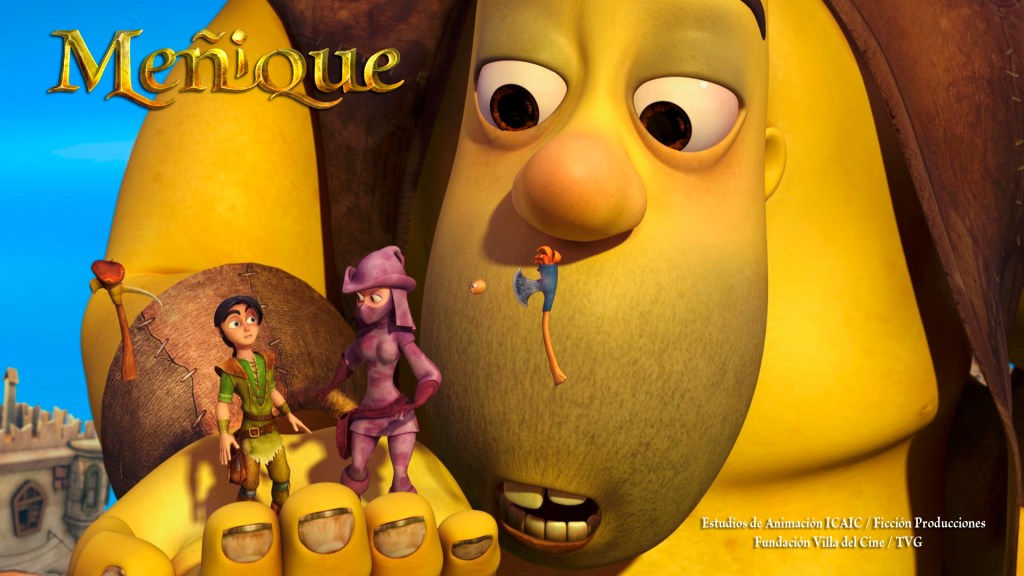
Although generally in Cuba we continue to watch films conventionally in the cinema or on the public TV network at home, other formats and platforms have arrived with the development of digital technologies. As a result, cinema production in Cuba has been facing an uphill struggle. The new wave of filmmakers is making documentaries and also interactive fiction film. We are in the era of the phenomenon ‘Hypercinema’, which implies a change during the story sequence to an interactive mode. During the 2000s work started on Cuba’s first 3D digital animation feature film ‘Meñique’, involving a team of more than a hundred and released in 2014. This led to the establishment of ICAIC’s own animation studios. The studios are now also exploring that intersection of cinema and gaming.
Today our filmmakers also respond to and are influenced by foreign trends and directors. Their focus is still life on the island, our national reality, while needing to present stories that connect to international audiences.
We found a lot of interest in the work of director Sara Gómez here in the UK, as a black woman behind the camera in the 1970s. What has been her influence on others in Cuba?
Today you can find a wide spectrum of themes as well as filmmakers in the film industry. Actually there are thousands of filmmakers following in the steps of Sara Gómez and other important directors. Themes such as the legacy of slavery and inequality, efforts to bring the voices of ordinary people into the frame, are still strong enough to attract the newest generation of filmmakers.
What steps are being taken to avoid Havana-centrism in the cinema industry?
Today there are several ideas and active policies to avoid Havana-centrism, but these efforts struggle to take off. Havana continues to host the largest number of productions. Cuban movies still keep making life in the city the centre of the storytelling. But I can honestly say, compared to the past you can find more stories today set in the countryside and, although less frequently, in coastal communities.
To help address this imbalance, TV Serrana (Mountain TV), created 30 years ago to reach remote mountain communities in the east of the country, has developed its own style and methods. Specialising in documentary production, TV Serrana is independent from ICAIC, and gets its funding from regional government structures.
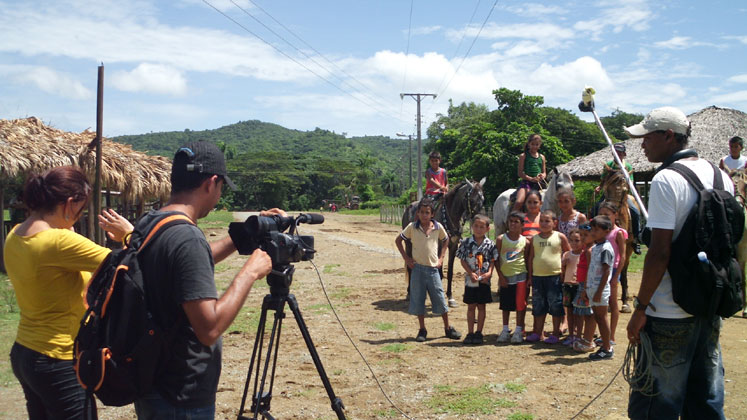
Nevertheless, training and formation of filmmakers and all specialities of cinema production can be understood as a two-way street, since ICAIC promotes courses and workshops, as well as TV Serrana itself becoming a well-known school of filmmaking. Both institutions, plus the International Cinema School (established 1986) in San Antonio de los Baños, outside of Havana, and the University of the Arts of Cuba with its Faculty of Audiovisual Media Art, that has campuses in several provinces of the country, are the pillars of Cuban cinema teaching today.
ICAIC also supports film festivals in our different regions, such as the annual International Film Festival for low budget films in Gibara on the north-east coast of Cuba.
Over the last 10 years ICAIC has created the legal framework for filmmakers and others in the industry to work independently from ICAIC on projects, and it also established the Development Fund so filmmakers can apply for partial funding. How do you think those two things are working?
Since the opening of the private sector and the recognition of filmmaking as a legitimate independent activity, more professionals from this field have been setting up in business around the island.
Over the last decade, the legal framework created by ICAIC to work independently has protected the filmmaker and others in the industry. So far, it has gone well, since they can legally hire and be hired; can manage a bank account for their projects and have the chance of a grant to complete the project.
At the same time, the Cinema Development Fund has become a powerful tool to try to satisfy a need. It is a success as far as it helps the independent Cuban cinema scene to thrive, because it cultivates the ground for it to grow in strength and diversity.
Does ICAIC take steps to actively distribute films to reach particular audiences?
In Cuba, distribution and cinema consumption in fully-equipped modern halls has been the model for the industry but in practice that has been best achieved in Havana. From the early 60s, there were strategies to reach rural audiences, such as the Cine Movil (Mobile Cinema), a truck that went to remote areas, equipped with projector, screen and generator. This was how people living in the remotest places of the island got to watch cinema productions for the first time, often before TV.
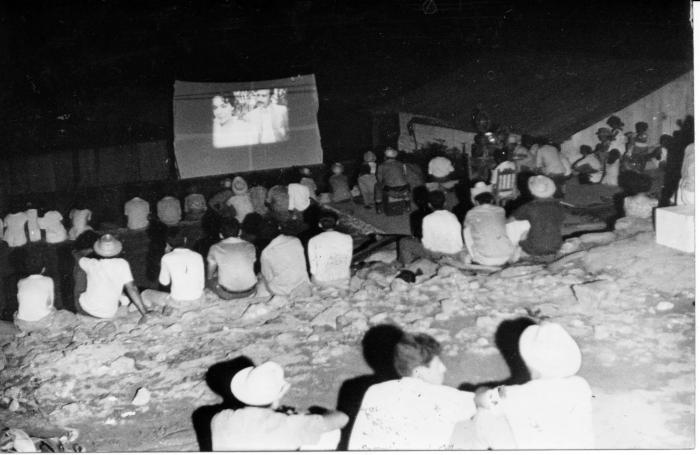
Right now, ICAIC is trying to revisit that approach to reach audiences outside the capital, despite the lack of resources due to the serious effects of the US blockade on the Cuban economy. At the same time there is an ongoing strategy to renovate and re-equip cinema halls in the main cities across the country. Many cinemas have aging 35mm projection equipment and are not equipped for showing digital films, but films are now being made digitally, while many older films have not yet been digitised.
What opportunities are there to get films shown on TV in Cuba or streamed online?
As the result of an alliance between ICAIC and the National Broadcasting Network, audiences get to watch Cuban, Latin American and, in general, foreign cinema on TV. Streaming is the future.
What are the worst effects of the blockade for the industry?
It is very difficult to access modern technologies (hardware and software), and purchasing licenses for software for post-production and animation is practically impossible. Getting access to the many different sources of international financing for film production and negotiating the banking operations necessary to guarantee co-productions in Cuba are both extremely difficult. Participation in the international film distribution market is massively restricted. These are the main problems filmmakers in Cuba face to produce films and distribute them.
Gladys Gonzalez Martin was in the UK in March 2024 for the Screen Cuba film festival, in which ICAIC was a collaborator, and spoke at many of the film screenings.
You can help ICAIC preserve Cuba’s cinematic heritage by donating to a special fund set up by Screen Cuba via the Music Fund for Cuba charity – donate here bit.ly/ICAICdonate
Interview published in CubaSi Spring 2024 issue.
Watch the short video to celebrate 65 years of ICAIC


 SCREEN CUBA, 15-28 March 2026, LONDON & BEYOND